Real-Life Eating
The Best Noom Alternative for Men in 2026
Noom works for people who like daily lessons and logging. If that workload is why you quit, here's what to look for in an alternative.
 Jan B.Co-Founder and CTO of ZANE
- 5 min read
- 1 sources
In this article 8 sections
Key takeaways
- Noom combines daily lessons, a color-coded food log and a calorie budget.
- Its weight program costs about $70 a month, or about $17 a month on a twelve-month plan.
- Daily logging is the weak spot of every tracker once a busy month starts.
- A good alternative needs no daily input, builds habits and still works in month six.
Noom has been one of the best-known weight loss apps for about a decade. It has millions of users, a large marketing budget and an approach built on well-established behavioral techniques.
It also has a food color system, daily lessons and a food log you’re expected to fill in for every meal. For many busy men, that daily workload is the reason they quit. Here’s what Noom does well, where it falls short for men with demanding schedules and what to look for in an alternative. ZANE is our own app, so keep that in mind where it comes up.
What Noom is
Noom is a weight loss app based on principles from cognitive behavioral therapy. The idea is that lasting weight loss comes from understanding why you eat the way you do, not only from tracking what you eat. In practice:
- You log what you eat, and foods are sorted into green, yellow and orange by how calorie-dense they are.
- You read short psychology lessons, usually five to ten minutes a day.
- You get a daily calorie budget and access to coaching.
As of September 2026, the weight program costs about $70 a month on a monthly plan and about $17 a month on a twelve-month plan. Noom also runs separate, more expensive programs that include GLP-1 medication.
For people who enjoy a structured lesson format and find food categories helpful, Noom can work well. The question is whether you’re that person.
Where Noom falls short for busy men
It needs daily logging. Every meal, every day. That’s manageable until the third week of a crunch at work, a business trip or a run of back-to-back meetings. Logging takes attention, and when you’re drained by evening, it’s the first thing to go. Once the log has gaps, the calorie budget stops meaning much. That’s not specific to Noom. In a trial of MyFitnessPal, most people used the app less and less after the first month.
The lessons can feel like homework. Some people enjoy learning why they emotionally eat. Many men with a full workday would rather have a setup that keeps the problem from coming up in the first place.
The color system adds decisions. Every food gets a category and every meal an evaluation. That’s one more judgment at each meal, when most busy men need fewer.
It’s built for everyone. Noom’s tone, community and check-ins are designed for a broad audience, which makes sense for a mass-market product. Some of the self-reflection exercises and group formats that work for that audience turn many men off.
You keep paying after you stop engaging. At $70 a month on the monthly plan, you’re paying for an app that still leaves most of the daily work to you. If the lessons and the log have stopped by month two, so has most of the value.
What to look for in an alternative
Many alternatives are just calorie trackers with a different look. If you want something that lasts, check for these:
No daily logging requirement. If the app needs every meal logged to work, it has the same weak spot as Noom.
Built to change habits. Recording what you ate is a means at best. What you want is to change what you eat, through habits that run without much thought. How habits actually work explains why that lasts longer than willpower.
Fits your schedule. Rigid meal plans, daily check-ins and prep-heavy routines don’t survive a demanding week.
Still works in month six. Most apps produce results while you’re actively engaged. What counts is what’s left once the novelty has worn off and only your habits are carrying you.
Starts from where you are. A generic calorie target and a meal template ignore your schedule, your preferences and the habits you already have.
ZANE and Noom side by side
| ZANE | Noom | |
|---|---|---|
| Daily food logging | No | Yes |
| Calorie counting | No | Yes |
| Daily lessons | No | Yes, 5 to 10 minutes |
| Built for | Men only | Broad audience |
| Approach | One habit at a time | Psychology lessons and food log |
| Coaching | AI coach, checks in after three quiet days | Coaches and groups |
| Price | 7-day free trial, then $24 a month or $144 a year | About $70 a month, or about $17 a month on a 12-month plan |
How ZANE works
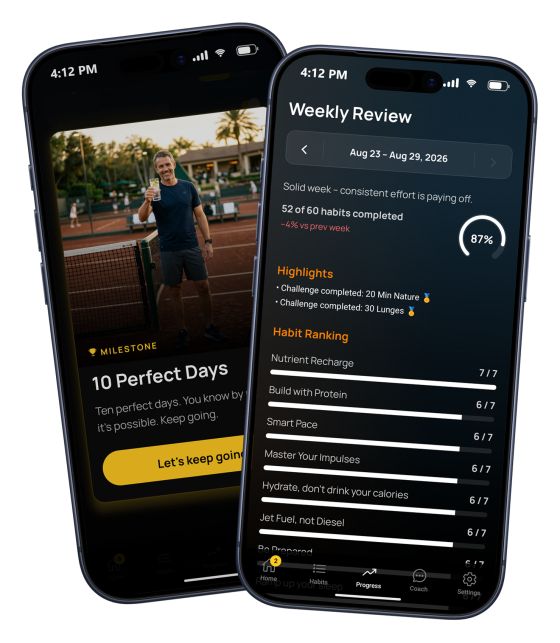
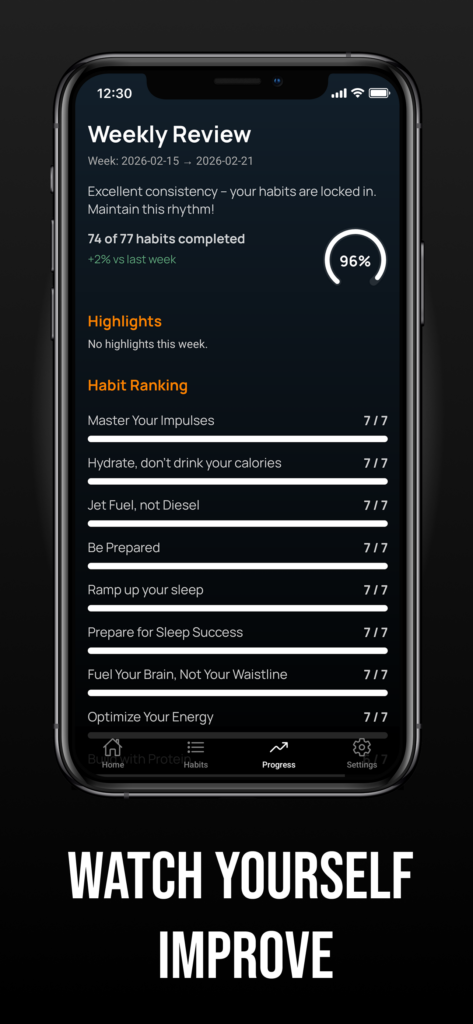
ZANE is a habit app built only for men. You don’t log food, count calories, follow a meal plan or read daily lessons.
Onboarding looks at where you already stand across a set of habits, and the app starts you with one new habit that fits your life, such as more protein at each meal. Once it’s been running for about a week, the next one unlocks and your list grows. An AI coach answers questions and looks at photos of your meals, and if you’ve gone quiet for three days, it gets in touch, because that’s the moment most attempts end. Weight and progress photos are optional.
The result is a change in how you eat that keeps running when you’re not thinking about the app. How to lose weight without counting calories shows the principles behind it.
When Noom is the right choice
Noom works for people who fit it. If you enjoy structured learning and find daily psychology lessons motivating, its curriculum is well made. If you find logging satisfying rather than tiring, the color system gives you clear guardrails. And if you’re considering GLP-1 medication, Noom’s medical programs are one way to get it with support. What nobody tells men about Ozempic covers what to build while you’re on it.
If that’s you, use Noom. If you’ve tried tracking before and dropped it after the first month, a different tracker won’t fix that. You need an approach that doesn’t depend on daily input.
The bottom line
Most nutrition apps lose busy men because they ask for too much attention every day from people who have none left. For the users Noom was built for, logging, lessons and daily engagement are the point. For men who need food to run in the background, they’re the reason it stops working. If you’ve been through Noom, MyFitnessPal and a few others, look at the approach before you blame yourself. The best nutrition app for men compares the other main options.
Sources
- Laing BY et al. Effectiveness of a smartphone application for weight loss compared with usual care in overweight primary care patients: a randomized, controlled trial. Annals of Internal Medicine, 2014. doi:10.7326/M13-3005
Jan B. is a sports scientist from the German Sport University Cologne and ZANE's CTO. Before building the app, he ran his own personal training studio in Cologne and taught more than 3,000 hours of group classes.
All articles by Jan B. →Your first habit is waiting
ZANE builds one nutrition habit at a time. No calorie counting, no meal logging. Try it free for 7 days.
Find your first habit