Fat Loss
Ozempic for Men: What Nobody Tells You
GLP-1 drugs work while you take them. What decides the long-term result is what you build in the meantime, and how much muscle you keep.
 Jan W.Co-Founder and Head Coach of ZANE
- 4 min read
- 4 sources
In this article 8 sections
Key takeaways
- Semaglutide and tirzepatide produced weight loss of about 15 to 20 percent in the main trials.
- A year after stopping semaglutide, people had regained about two thirds of the weight they lost.
- A large share of the weight lost can be muscle, so strength training and high protein matter while you take them.
- Use the months on the drug to build habits that don't depend on it.
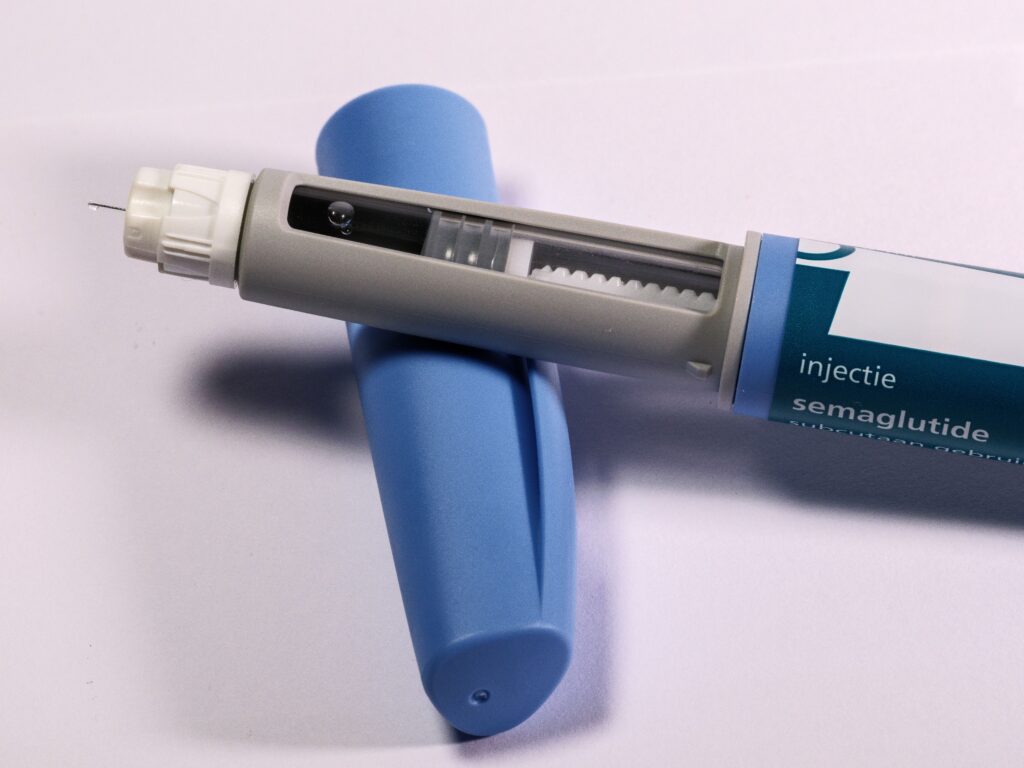
GLP-1 drugs such as semaglutide and tirzepatide, sold as Ozempic, Wegovy, Mounjaro and Zepbound, are the biggest change in obesity medicine in decades. The results are real. In the main trials, people lost about 15 percent of their body weight on semaglutide and up to about 20 percent on the highest dose of tirzepatide.
Less gets said about what happens when you stop, and about what these drugs don’t do. That’s what this article covers. It isn’t medical advice: whether a GLP-1 drug makes sense for you is a decision for you and your doctor.
How GLP-1 drugs work
GLP-1 is a hormone your gut releases after a meal. It tells your brain you’re full, slows how fast your stomach empties and reduces the urge to eat. The drugs copy and strengthen that signal.
Men who take them often describe food becoming uninteresting. Portions shrink without effort and the constant pull toward snacks goes quiet. The drug doesn’t burn fat directly. It lowers how much you eat, and the fat loss follows from that deficit.
What happens when you stop
The STEP 1 trial, the large study behind semaglutide for weight loss, followed participants for a year after they stopped the drug. By then they had regained about two thirds of the weight they had lost, and most improvements in blood pressure, blood sugar and cholesterol had faded.
These participants had received lifestyle counseling during the trial. It still wasn’t enough to hold the result once the appetite suppression was gone. That’s the part worth taking seriously: advice alone doesn’t turn into habits that survive normal hunger. Habits need to be built on purpose, one at a time, while the drug makes eating less easy.
What the drugs don’t change
Most overeating isn’t driven by hunger alone. It happens late at night after a stressful day, over drinks with colleagues and in convenience meals grabbed between meetings. A GLP-1 drug turns down your appetite, but it doesn’t change what you reach for when you’re stressed, what’s in your kitchen or what you order at a business dinner. When the drug stops, all of that is still there. If stress is your trigger, start with how to stop stress eating.
The muscle problem
Fast weight loss costs muscle as well as fat. In the body-scan part of the STEP 1 trial, close to 40 percent of the weight lost was lean mass. In the main tirzepatide trial it was roughly a quarter.
For men, and especially men over 35, that matters. Less muscle means a lower daily burn, which makes it easier to regain fat after stopping, and muscle is much slower to rebuild than to lose. If you take a GLP-1 drug, lift weights two or three times a week and keep your protein high. How much protein men actually need gives you a number to aim for.
Who these drugs are for
This isn’t an argument against GLP-1 drugs. For weight management they are approved for adults with a BMI of 30 or more, or 27 or more with a weight-related condition such as high blood pressure or type 2 diabetes. In the SELECT trial, semaglutide cut heart attacks, strokes and cardiovascular deaths by about 20 percent in people with overweight or obesity and existing heart disease, even without diabetes. For the people they’re meant for, they work.
More and more men with 20 or 30 pounds to lose now use them as a shortcut. For them, the result tends to fade after stopping unless something else has changed in the meantime.
Use the drug as a bridge
Men who keep their results tend to treat the drug as a bridge. Appetite suppression gives you a window in which eating less is easy. Use it to set up the things that don’t depend on the drug:
- regular meal times, so fewer meals happen on impulse
- protein at every meal, which keeps you full once normal appetite returns
- a kitchen stocked with food you want to eat by default
- enough sleep, because short sleep raises hunger hormones (more in how sleep deprivation makes you fat)
- a plan for stressful evenings that doesn’t end in the fridge
Add them one at a time so they’re automatic by the time you taper off. How to build eating habits that actually stick shows how.
The bottom line
GLP-1 drugs work, and the evidence is clear. They lower your appetite while you take them, but they don’t change the habits and surroundings that led to the weight in the first place, and they cost muscle if you don’t protect it. Whether you take one, have stopped or have decided against it, the question that decides the long-term result is the same: what do your daily habits look like?
Sources
- Wilding JPH et al. Once-weekly semaglutide in adults with overweight or obesity. New England Journal of Medicine, 2021. doi:10.1056/NEJMoa2032183
- Jastreboff AM et al. Tirzepatide once weekly for the treatment of obesity. New England Journal of Medicine, 2022. doi:10.1056/NEJMoa2206038
- Wilding JPH et al. Weight regain and cardiometabolic effects after withdrawal of semaglutide: the STEP 1 trial extension. Diabetes, Obesity and Metabolism, 2022. doi:10.1111/dom.14725
- Lincoff AM et al. Semaglutide and cardiovascular outcomes in obesity without diabetes. New England Journal of Medicine, 2023. doi:10.1056/NEJMoa2307563
Jan W. is a sports scientist from the German Sport University Cologne and has coached for 20 years, from busy professionals to pro athletes. He has lived on Hawaii for over a decade and has the final word on everything training-related at ZANE.
All articles by Jan W. →Your first habit is waiting
ZANE builds one nutrition habit at a time. No calorie counting, no meal logging. Try it free for 7 days.
Find your first habit