Sleep & Stress
How Sleep Deprivation Makes You Fat
Short sleep raises hunger, weakens your brakes on food and changes what you lose in a diet. Here's what sleep studies have found and what to fix first.
In this article 8 sections
Key takeaways
- Short sleep lowers leptin and raises ghrelin, so you feel hungrier on the same food.
- In a two-week diet, 5.5 instead of 8.5 hours in bed cut fat loss by more than half and increased the loss of lean mass.
- A week of 5-hour nights lowered testosterone in young men by 10 to 15 percent.
- Aim for at least 7 hours with a steady wake time. Sleeping in on weekends doesn't undo a short week.
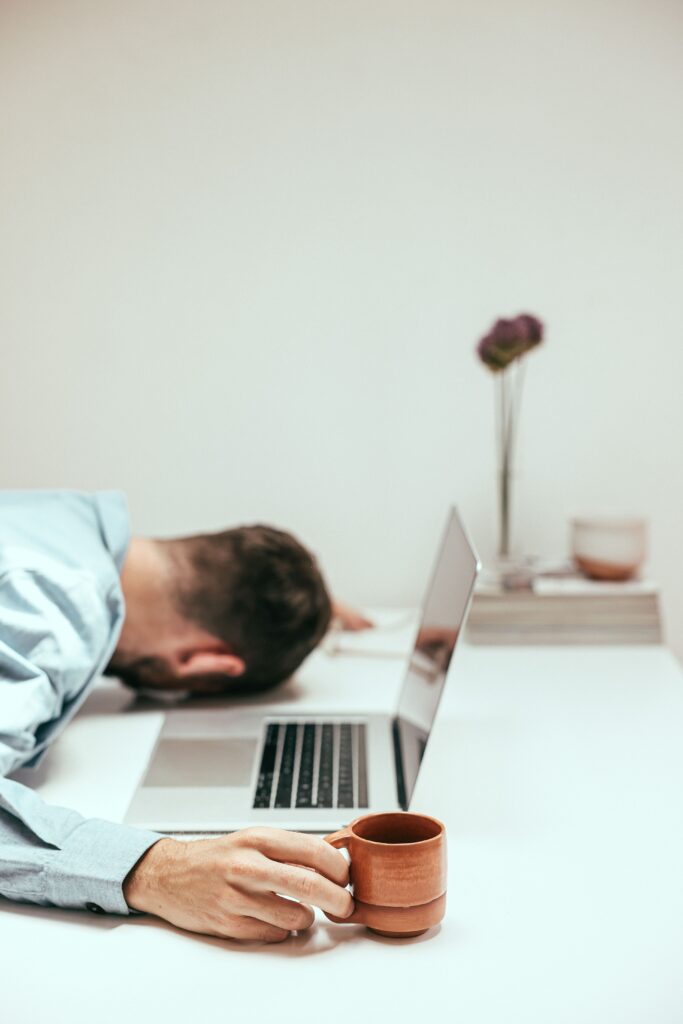
Most men treat sleep as the budget that covers everything else. A deadline costs two hours, an early flight three, a busy week a little every night.
That trade gets the work done, but your body pays for it. Short sleep changes the hormones that control hunger, weakens the part of your brain that says no to food and even changes what kind of weight you lose when you diet. Here’s what sleep studies have found and what to fix first.
Short sleep makes you hungrier
Two hormones do much of the work of regulating appetite. Leptin comes from fat tissue and tells your brain there’s enough energy stored. Ghrelin comes from the stomach and drives hunger.
Sleep moves both in the wrong direction. In a study of more than 1,000 adults, people who usually slept 5 hours had about 15 percent less leptin and 15 percent more ghrelin than those who slept 8 hours, and they had a higher BMI. A lab study in young men found the same pattern after only two nights of 4 hours in bed. Leptin fell, ghrelin rose and hunger went up by about a quarter. The men wanted sweets, salty snacks and starchy foods most.
So when you eat more after a bad night, you’re responding to a hunger signal that really is stronger than usual.
Your brain says yes more easily
In a brain imaging study, one night without sleep dampened activity in the frontal areas that weigh choices and made a deeper, more emotional region react more strongly to pictures of high-calorie food. The sleep-deprived participants also said they wanted those foods more.
That fits what most men know from experience. After a short night, the evening plan for a sensible dinner is more likely to end at the fridge or the drive-through. If your evenings are also stressful, how to stop stress eating covers that side of the problem.
In a diet, short sleep costs you muscle
The most direct evidence comes from a small, tightly controlled study. Ten overweight adults followed the same calorie deficit for two weeks, twice: once with 8.5 hours in bed, once with 5.5. Total weight loss was about the same both times. With short sleep, though, they lost 55 percent less fat and 60 percent more lean mass, and they were hungrier.
For anyone trying to keep muscle while losing fat, that’s exactly the wrong direction. It can also explain a stall that makes no sense on paper. The real reason you hit a plateau goes through the other usual causes.
Testosterone, cortisol and growth hormone
Testosterone rises while you sleep, so cutting sleep short cuts into that rise. When ten healthy young men spent a week sleeping 5 hours a night, their daytime testosterone dropped by 10 to 15 percent. With age, testosterone falls by about 1 to 2 percent a year, so one week of short nights produced a drop that normally takes years. Lower testosterone makes it harder to hold on to muscle. More on what moves it in nutrition and testosterone.
Cortisol normally falls toward the evening. After a night of restricted or no sleep, it stayed higher into the next evening in a lab study. Chronically high cortisol is linked to more fat around the waist, although sleep is only one of several things that keep it up.
Growth hormone, which supports repair after training, is released mostly during deep sleep early in the night. Deep sleep already declines with age in men, and short or broken nights take away more of it.
How much is enough
The American Academy of Sleep Medicine and the Sleep Research Society recommend at least 7 hours a night for adults, on a regular basis. Needs vary from person to person, and 7 to 9 hours covers most men.
Sleeping in on weekends doesn’t make up for a short week. In a study that mimicked a work week of 5-hour nights followed by a weekend of unlimited sleep, participants kept snacking more after dinner, kept gaining weight and became less sensitive to insulin. The weekend didn’t reset any of it.
What to fix first
If you eat well and train consistently and still don’t see results, look at your sleep before you cut calories further.
Get to 7 hours. Count back from the time you have to get up and set your bedtime from there. Everything else on this list helps less if the total is too short.
Keep the same wake time every day. Your internal clock times cortisol and melatonin. Getting up at the same time, weekends included, keeps that clock steady and makes it easier to fall asleep at night.
Watch the evening drinks. Alcohol helps you fall asleep faster but breaks up sleep in the second half of the night, and larger amounts cut REM sleep. See what alcohol does to your body composition.
Dim the screens. In a lab study, reading on a light-emitting tablet in the hours before bed delayed melatonin, made it take longer to fall asleep and left people less alert the next morning than reading a printed book. An hour without screens before bed, or at least turning the brightness down, is a reasonable start.
Keep the bedroom cool and dark. Your core temperature drops as you fall asleep, and a warm room works against that. Around 65°F (18°C) suits many people.
The bottom line
Sleep sets the conditions for every food and training decision you make the next day. On 5 or 6 hours you’re hungrier and more likely to give in, and in a diet more of what you lose is muscle. Before you add another rule to your diet, get to 7 hours. It’s one of the levers in losing weight without counting calories, and after 35 it matters even more, as why your diet stopped working after 35 explains.
Sources
- Taheri S et al. Short sleep duration is associated with reduced leptin, elevated ghrelin, and increased body mass index. PLoS Medicine, 2004. doi:10.1371/journal.pmed.0010062
- Spiegel K et al. Sleep curtailment in healthy young men is associated with decreased leptin levels, elevated ghrelin levels, and increased hunger and appetite. Annals of Internal Medicine, 2004. doi:10.7326/0003-4819-141-11-200412070-00008
- Greer SM et al. The impact of sleep deprivation on food desire in the human brain. Nature Communications, 2013. doi:10.1038/ncomms3259
- Nedeltcheva AV et al. Insufficient sleep undermines dietary efforts to reduce adiposity. Annals of Internal Medicine, 2010. doi:10.7326/0003-4819-153-7-201010050-00006
- Leproult R, Van Cauter E. Effect of 1 week of sleep restriction on testosterone levels in young healthy men. JAMA, 2011. doi:10.1001/jama.2011.710
- Leproult R et al. Sleep loss results in an elevation of cortisol levels the next evening. Sleep, 1997. doi:10.1093/sleep/20.10.865
- Watson NF et al. Recommended amount of sleep for a healthy adult: a joint consensus statement of the American Academy of Sleep Medicine and Sleep Research Society. Sleep, 2015. doi:10.5665/sleep.4716
- Depner CM et al. Ad libitum weekend recovery sleep fails to prevent metabolic dysregulation during a repeating pattern of insufficient sleep and weekend recovery sleep. Current Biology, 2019. doi:10.1016/j.cub.2019.01.069
- Ebrahim IO et al. Alcohol and sleep I: effects on normal sleep. Alcoholism: Clinical and Experimental Research, 2013. doi:10.1111/acer.12006
- Chang AM et al. Evening use of light-emitting eReaders negatively affects sleep, circadian timing, and next-morning alertness. Proceedings of the National Academy of Sciences, 2015. doi:10.1073/pnas.1418490112

Jan W. is a sports scientist from the German Sport University Cologne and has coached for 20 years, from busy professionals to pro athletes. He has lived on Hawaii for over a decade and has the final word on everything training-related at ZANE.
All articles by Jan W. →Your first habit is waiting
ZANE builds one nutrition habit at a time. No calorie counting, no meal logging. Try it free for 7 days.
Find your first habit