Habits & Mindset
How Habits Actually Work (And Why You Keep Failing Without Them)
Plans need you rested and motivated every day. Habits keep running in hard weeks. Here's how they form and how to build them around food.
 Jan B.Co-Founder and CTO of ZANE
- 7 min read
- 6 sources
In this article 11 sections
Key takeaways
- A habit runs on a cue, a routine and a reward. Keep the cue and swap the routine.
- Old habits aren't erased, which is why going cold turkey rarely lasts.
- Make each habit small enough to do on 90 percent of days, including the bad ones.
- Build one habit at a time. A missed day doesn't matter, a two-week gap does.
Most men who struggle with their diet have tried hard, often more than once. What they usually had was a plan.
A plan tells you what to do, and you follow it until the week gets hard. A deadline, a trip, a stretch of bad sleep, and the plan falls apart, because it needs you rested, motivated and organized every day. Real life rarely delivers all three at once.
A habit works differently. Once it’s built, it keeps running in the hard weeks too. Here’s how habits form, why most attempts to build them fail and how to put that to work on what you eat.
What a habit is
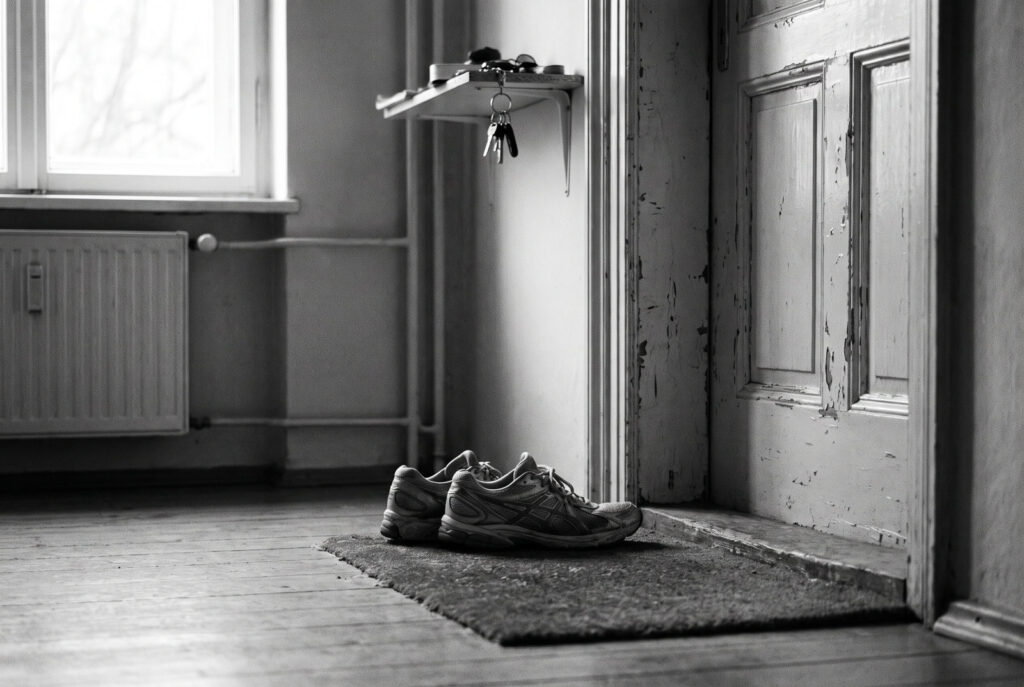
A habit is a behavior your brain has automated. Repeat something often enough in the same situation, and it stops needing a decision. The situation triggers it. You don’t decide to brush your teeth in the morning. Standing at the sink is enough.
A large part of daily life runs this way. In diary studies, about 43 percent of what people did each day was done almost every day in the same setting, often while they were thinking about something else.
That changes how to look at self-control. A series of studies found that people with high self-control mainly have stronger good habits, such as exercising regularly and eating well, and those habits explained much of why they did better in life. Their routines leave them less to resist. Building habits is how you get there, and it doesn’t depend on being born with iron discipline.
The habit loop: cue, routine, reward
The most useful way to picture a habit has three parts. The writer Charles Duhigg made it popular, and it fits what brain research has found about how the basal ganglia store routines.
The cue is the trigger: a time, a place, a person, a feeling or something you just did. Sitting down at your desk at noon can be one. So can the tension that builds in the late afternoon, or walking into the kitchen.
The routine is the behavior the cue sets off. You reach for the snack, order the usual, open the fridge.
The reward is what your brain registers afterwards. It can be small: a bit of relief, a moment of satisfaction, the comfort of a familiar sequence. The brain notes it, and the next time the cue shows up, the expected reward pulls the routine forward.
Why old habits don’t go away
When you stop a habit, your brain doesn’t erase it. Research on learning shows that the new behavior is stored on top of the old one, and the old pattern tends to come back in its original setting or after some time away. That’s why the afternoon snack reappears the first week you’re back at your old desk.
Going cold turkey relies on holding the routine back every time the cue fires. That works until a day comes when you’re too tired or stressed to hold it back, and then the old routine takes over again.
Swapping works better. Keep the cue and look for a routine that gives you a similar reward. If afternoon stress sends you to the vending machine for relief, a short walk, a glass of water or two minutes outside can give you some of that relief too. With enough repetitions, the new routine attaches to the old cue. How to stop stress eating goes deeper on this particular loop.
It helps to write the new routine down as an if-then plan: “When I sit down for lunch, I start with a protein source.” A meta-analysis of 94 studies found that plans in this format clearly increased how often people followed through on their goals.
How long it takes
The popular claim that a habit takes 21 days goes back to a 1960 self-help book by a plastic surgeon, who noticed that patients got used to their new appearance in about three weeks. It was never tested as a rule for habits.
When researchers followed 96 people building a new eating, drinking or exercise habit over twelve weeks, the time it took varied a lot from person to person and from behavior to behavior. Simple actions became automatic faster than complicated ones. And missing a single day didn’t set anyone back.
So judge a habit by how automatic it feels, not by the calendar. One missed day doesn’t matter. What ends a habit is a two-week gap you never come back from.
Make it small enough for your worst week
Most men set habits they can manage on a good day. Good days are easy. The habit has to survive the Tuesday of a hard week, when the meeting ran long, the afternoon was lost and there’s nothing left in the tank by evening.
We use a simple test: if you can’t do it 90 percent of the time, including stressful days, travel days and days after a short night, it’s too big. Make it smaller.
- Instead of “eat a balanced breakfast every morning,” start with “have a protein source at breakfast.”
- Instead of “prep all my meals on Sunday,” start with “add one protein source to lunch.”
- Instead of “eat clean every day,” start with “add a vegetable to dinner.”
Tiny habits add up over time. Drinking a glass of water before your coffee, eating a piece of fruit with breakfast or packing tomorrow’s lunch while dinner cooks takes less than five minutes. Swapping one daily can of soda for water or a zero-calorie drink removes roughly 50,000 calories over a year.
One habit at a time
The second common mistake is changing everything at once: new breakfast, new lunch, no snacks, more vegetables, no late eating, more water. Each change needs attention while it’s new, and when the first hard week comes, it takes all of them down together. For many men, that’s the real reason earlier attempts didn’t last.
Pick one habit and keep at it until it runs on most days without effort. Then add the next one and keep the first. Over a few months, you end up with several habits that run on their own, and each one tends to make the next easier. Protein at lunch, for example, means less afternoon hunger, which makes the evening habit easier to keep.
Basics before gadgets
Cold plunges, red light panels, glucose monitors: there’s no shortage of tools for men who want to optimize. They can feel productive, and some have their place. But a man can own all of them and still have no daily routine that holds.
The basics haven’t changed: enough sleep, enough protein, regular strength training and a handle on stress. A consistent bedtime does more for most men than an occasional cold plunge, and protein at every meal does more than any supplement stack. Get the basics running as habits first. Then optimize, if you still want to.
Your present self versus your future self
Economists call it present bias: a reward that arrives later feels worth much less than one you get now. Your future self wants energy, strength and a body you like. Your present self, on the couch at 9 p.m., wants something easy that tastes good. The one holding the remote usually wins.
You can tilt that contest in three ways. Decide ahead of time, so there’s no choice to make in the moment. Remove friction, so the better option is also the faster one. And give yourself a small reward right away, such as ticking the habit off a list, so your present self gets something out of it too.
Putting it to work on food
Every eating decision has a cue: a certain time of day, sitting down to eat, walking past the kitchen, coming home, the end of a meeting, stress in the late afternoon. Most of what you eat follows loops like these, largely without thinking. The question is whether those loops serve you.
Take lunch. You sit down around noon every day, and right now whatever is convenient ends up on your plate. The new habit: before anything else, you pick a protein source. Chicken, eggs, Greek yogurt, tuna, the form doesn’t matter. The reward is quieter: steadier energy, less hunger in the afternoon and the sense that you followed through. After enough repetitions, you reach for the protein before you’ve really thought about lunch. How much you need is covered in how much protein men actually need.
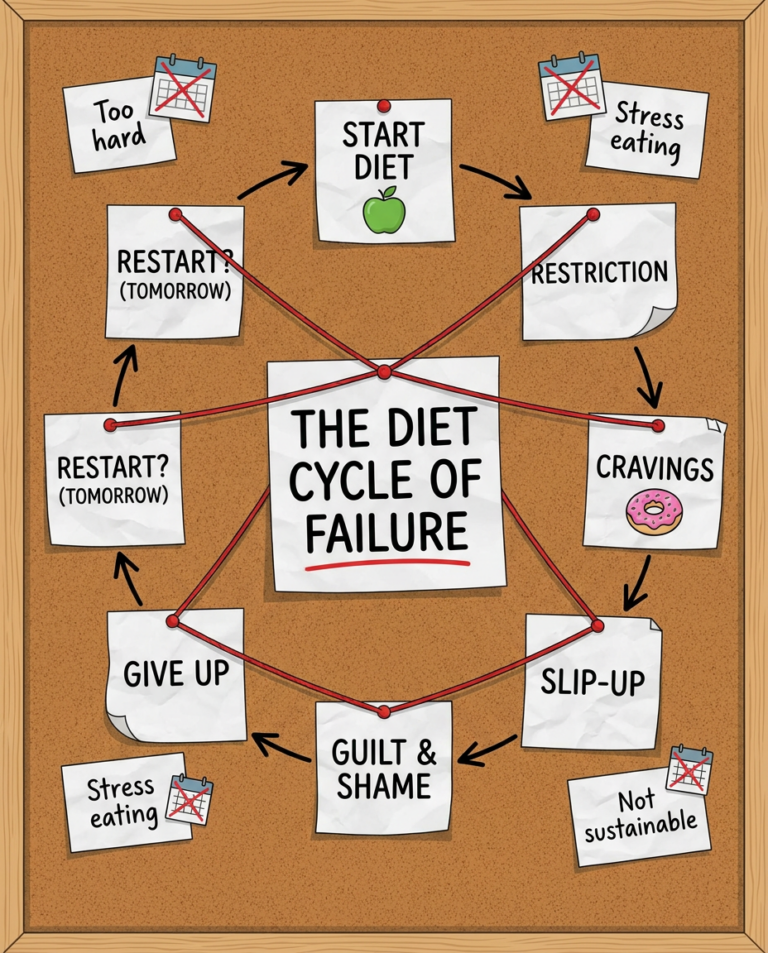
For more examples of habits worth building, see eating habits that stick. If you’ve quit diet after diet, why you can’t stick to a diet explains what usually goes wrong.
The bottom line
Plans need something from you every day. Habits stop needing it once they’re built. Old habits don’t get deleted, so replace the routine and keep the cue. Build one habit at a time, make it small enough for your worst week and give it the repetitions it needs. Then add the next one.
Sources
- Wood W et al. Habits in everyday life: thought, emotion, and action. Journal of Personality and Social Psychology, 2002. doi:10.1037/0022-3514.83.6.1281
- Galla BM, Duckworth AL. More than resisting temptation: beneficial habits mediate the relationship between self-control and positive life outcomes. Journal of Personality and Social Psychology, 2015. doi:10.1037/pspp0000026
- Graybiel AM. Habits, rituals, and the evaluative brain. Annual Review of Neuroscience, 2008. doi:10.1146/annurev.neuro.29.051605.112851
- Bouton ME. Context and behavioral processes in extinction. Learning & Memory, 2004. doi:10.1101/lm.78804
- Gollwitzer PM, Sheeran P. Implementation intentions and goal achievement: a meta-analysis of effects and processes. Advances in Experimental Social Psychology, 2006. doi:10.1016/S0065-2601(06)38002-1
- Lally P et al. How are habits formed: modelling habit formation in the real world. European Journal of Social Psychology, 2010. doi:10.1002/ejsp.674
Jan B. is a sports scientist from the German Sport University Cologne and ZANE's CTO. Before building the app, he ran his own personal training studio in Cologne and taught more than 3,000 hours of group classes.
All articles by Jan B. →Your first habit is waiting
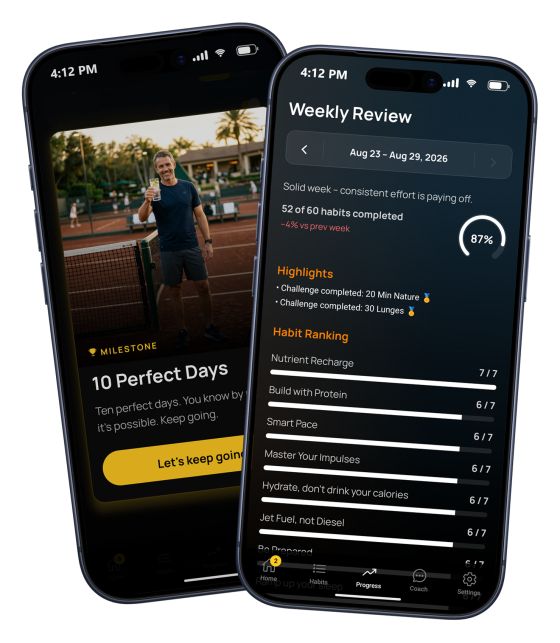
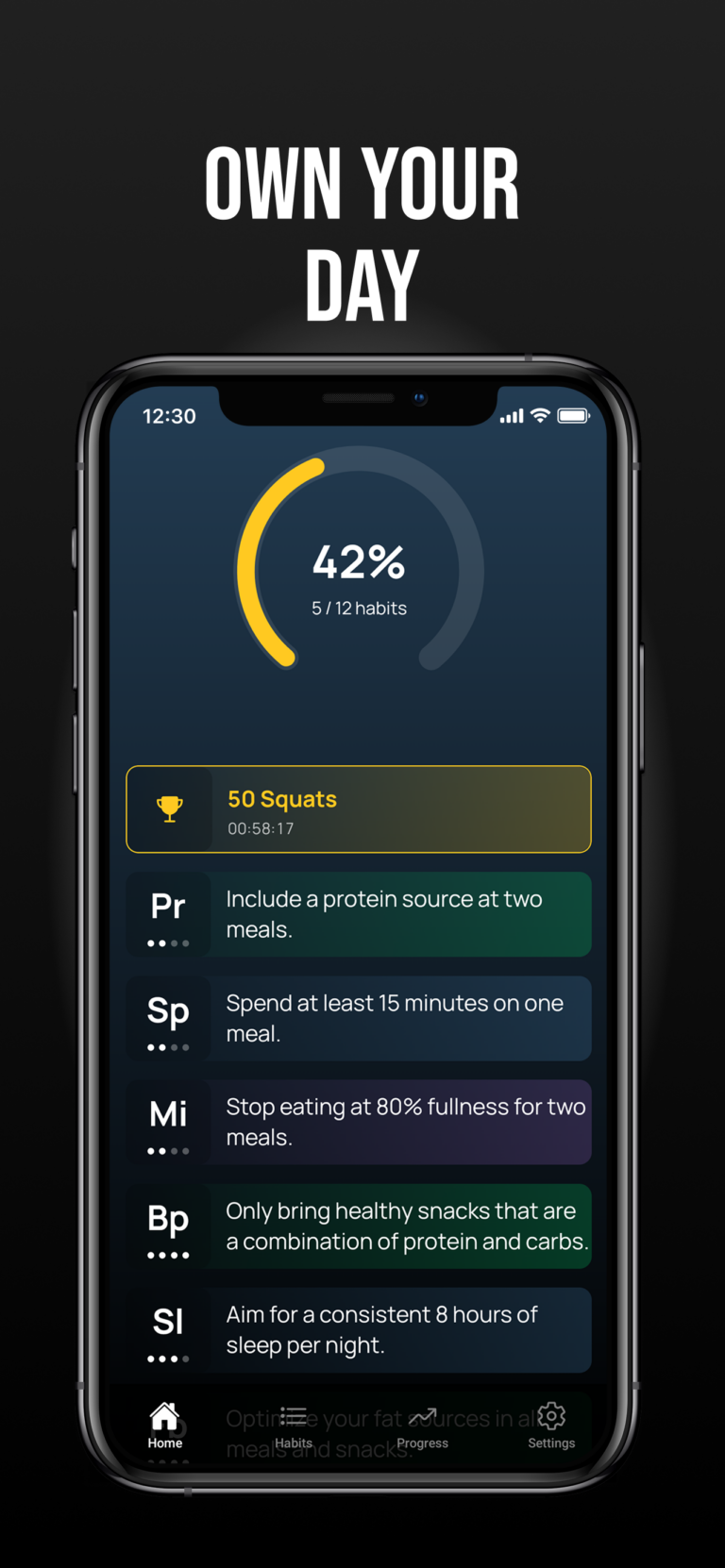
ZANE builds one nutrition habit at a time. No calorie counting, no meal logging. Try it free for 7 days.
Find your first habit