Habits & Mindset
How to Build Eating Habits That Actually Stick
Motivation fades in the first hard week. Small, specific habits built one at a time keep running. Here's a sequence that works for busy men.
 Jan B.Co-Founder and CTO of ZANE
- 6 min read
- 4 sources
In this article 10 sections
Key takeaways
- Shrink each habit until it's almost impossible to miss, then build on it.
- Attach new habits to something you already do and remove friction around them.
- Start with protein at breakfast, then add one habit at a time while keeping the earlier ones.
- Decide now how you'll come back after a missed day. One miss doesn't hurt the habit.
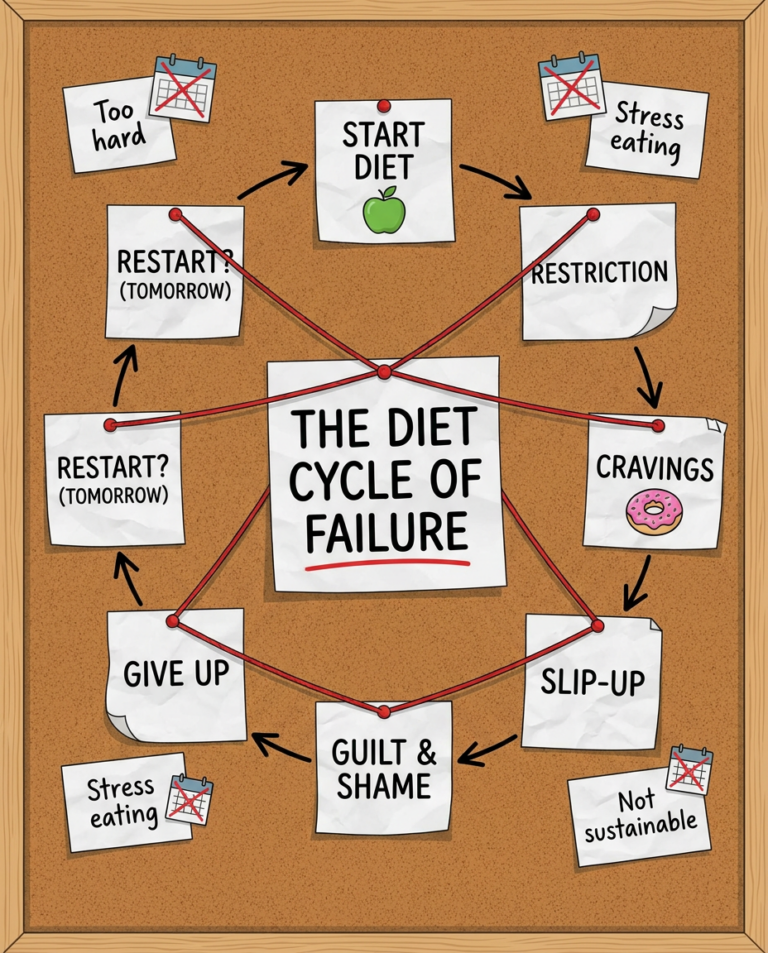
The diet industry sells motivation: the plan, the program, the transformation video, the fresh start on Monday.
Most men who struggle with food have plenty of it. They have good reasons to change, they start hard and they mean it. Then a busy week comes, the motivation fades, and there’s nothing underneath to carry them.
Habits are what goes underneath. They run on repetition and structure, which is why they last. Here’s how to build eating habits that hold up in the weeks when motivation doesn’t.
Why most attempts fail
Most new eating habits fail because they’re too big, too complicated or too dependent on a good week.
Take the man who commits to meal prep every Sunday. He cares about it. But Sunday prep needs time, energy, a shopping trip and a free afternoon. One Sunday with family plans, a work deadline or a hangover ends the streak, and once the streak is broken, it’s easy to let the whole thing go.
The fix is to shrink the habit until it’s almost impossible to miss, then build on top of it once it works. How habits actually work explains the mechanism behind this.
Three things that decide whether a habit sticks
Friction. Every extra step between the cue and the behavior is a place where the habit can break. Greek yogurt at eye level in the fridge beats a plan to buy protein on the way home. Small differences count: in a cafeteria study, moving a food about ten inches farther away or swapping the serving spoon for tongs cut how much of it people took by 8 to 16 percent. Make the habit you want the easiest option.
Specificity. “Eat healthier” is a wish. “Have eggs or Greek yogurt before I leave the house” is a habit. Writing it as an if-then plan, such as “when I pour my first coffee, I eat a protein source,” helps even more. Across 94 studies, plans in this format clearly improved how often people followed through.
Anchoring. A new habit sticks more easily when you attach it to something you already do every day. Protein with your morning coffee is easier than adding a new meal to your day. Look for the things you do without fail and hang the new habit on one of them.
Start by noticing
Before you change anything, spend a few days paying attention. You don’t need to log every bite. Just note when you eat something you didn’t plan to and what came right before it: stress, tiredness, a meeting that ran long, drinks with friends, walking past the kitchen. The patterns show up quickly, and they tell you where your first habit belongs.
One habit, then the next
The most common mistake is changing everything at once: new breakfast, new lunch, no alcohol, supplements, cooking dinner, counting calories, nothing after 8 p.m. That’s a full renovation, and it needs motivation in every area at the same time. When one part gives way, the rest usually follows.
Start with one habit instead. For most men, breakfast is the best place, because it happens at home and before the day can get in the way. The habit is a protein source at breakfast, every day. The form doesn’t matter: eggs, Greek yogurt, cottage cheese, a protein shake, leftover chicken.
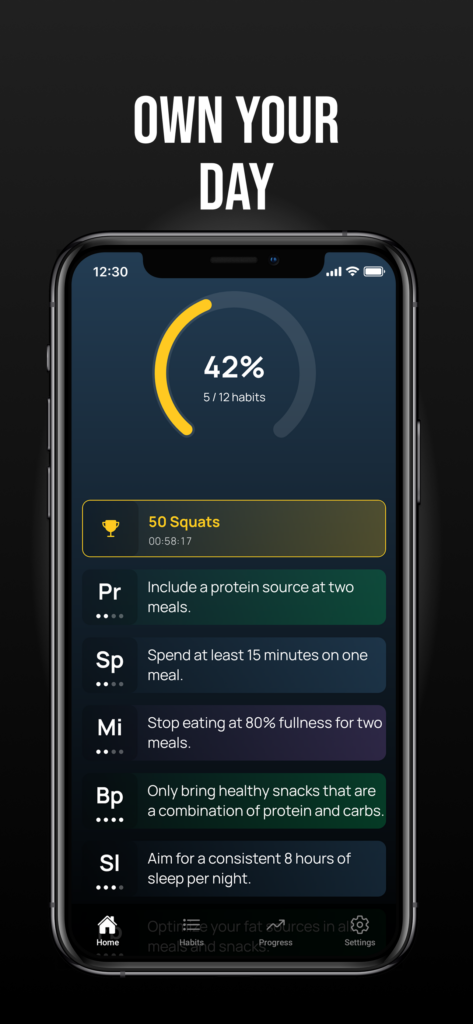
Once it runs on most days without thinking, add the next one and keep the first. A sequence that works for many men:
- Protein at breakfast. Any source, every day.
- Protein at lunch. Same rule. See how much protein men actually need for the numbers behind it.
- A vegetable at lunch and dinner. Not a big salad, not a specific vegetable. Any vegetable counts.
- Water as your default drink. Water, coffee and tea by default. Soda, juice and sweetened coffee drinks become deliberate choices.
- A set end to eating. Pick a time after dinner when the kitchen closes. That alone cuts out much of the late-night grazing.
At the end, five behaviors run on their own. You haven’t counted a calorie or prepped a single meal. Your energy is usually steadier, and dinner gets easier because you don’t arrive at it starving. That’s the approach behind losing weight without counting calories.
Plan for the usual obstacles
Stress. A hard day pushes you toward comfort food and weakens your brakes at the same time. How to stop stress eating covers what to do about it.
No time. Keep backups that need no cooking: Greek yogurt, jerky, canned tuna, fruit, nuts. More ideas in how to eat healthy when you’re busy.
Eating out. Order a protein-based main, grilled rather than fried when you have the choice, and share dessert if you want it. One restaurant meal doesn’t decide anything.
Cravings. Wait ten minutes before you decide. Sometimes the craving passes. If it doesn’t, have a normal portion on purpose, sitting down, and move on.
Short nights. Poor sleep raises hunger and makes junk food more tempting. How sleep deprivation makes you fat explains why.
Plan for the missed day
You will miss a day, maybe a week. Over months, that’s normal. In a study that followed people building new habits, a single missed day made no difference to how the habit developed. What matters is how quickly you come back.
So set your comeback rule now, as an if-then plan: if I miss, the next meal gets its protein anchor. No new Monday, no promise to do better. Just the next meal.
Shape your environment
You can’t count on discipline at the end of a long day. You can count on what’s in your kitchen. Stock the foods your habits need, keep the ones they compete with out of the house or at least out of sight, and put the right choices where you see them first. That way the right behavior is also the easy one.
Get other people on your side
Support from other people makes a measurable difference. In a weight loss study, participants who joined with friends and got support built into the program were far more likely to finish it than those who joined alone. Afterwards, 66 percent of them kept all the weight off over the following six months, compared with 24 percent of those who went it alone.
That doesn’t need to be a group program. Tell your partner what you’re working on, especially if they do the shopping. Find a friend or coworker with a similar goal and check in once a week. Or use a coach who notices when you go quiet.
The bottom line
Eating habits that stick are small, specific, anchored to something you already do and supported by your kitchen. They don’t depend on motivation or a perfect week, and they come with a plan for the day you miss. Build one, wait until it runs on its own, then build the next. Within a few months, most of your eating runs on habits, which leaves far less to decide each day.
Sources
- Rozin P et al. Nudge to nobesity I: minor changes in accessibility decrease food intake. Judgment and Decision Making, 2011. doi:10.1017/S1930297500001935
- Gollwitzer PM, Sheeran P. Implementation intentions and goal achievement: a meta-analysis of effects and processes. Advances in Experimental Social Psychology, 2006. doi:10.1016/S0065-2601(06)38002-1
- Lally P et al. How are habits formed: modelling habit formation in the real world. European Journal of Social Psychology, 2010. doi:10.1002/ejsp.674
- Wing RR, Jeffery RW. Benefits of recruiting participants with friends and increasing social support for weight loss and maintenance. Journal of Consulting and Clinical Psychology, 1999. doi:10.1037/0022-006X.67.1.132
Jan B. is a sports scientist from the German Sport University Cologne and ZANE's CTO. Before building the app, he ran his own personal training studio in Cologne and taught more than 3,000 hours of group classes.
All articles by Jan B. →Your first habit is waiting
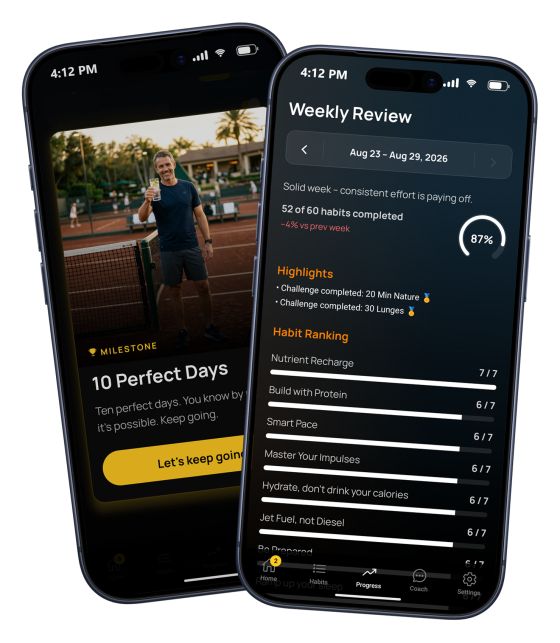
ZANE builds one nutrition habit at a time. No calorie counting, no meal logging. Try it free for 7 days.
Find your first habit